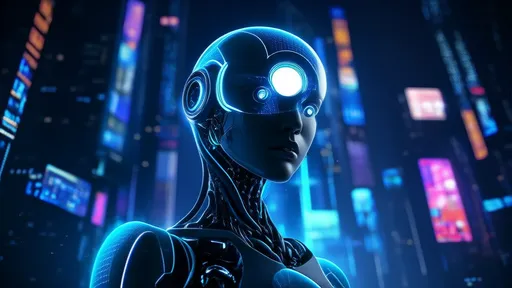
The concept of embodied intelligent agents evolving behavioral patterns within virtual environments represents a fascinating frontier in artificial intelligence and computational neuroscience. Unlike traditional AI systems that operate in abstract, disembodied frameworks, these agents interact with digital worlds through simulated physical forms, allowing for more nuanced and adaptive learning processes. This paradigm shift is reshaping how researchers approach machine learning, cognitive modeling, and even our understanding of biological intelligence.
At the heart of this innovation lies the principle that intelligence cannot be divorced from physical interaction. Embodied cognition suggests that an agent's mental capacities emerge from its dynamic relationship with the environment. In virtual settings, this translates to AI entities developing problem-solving strategies through trial-and-error navigation, object manipulation, and social interactions with other agents. The virtual world becomes both playground and proving ground, where behaviors evolve through continuous environmental feedback rather than pre-programmed rules.
Recent breakthroughs have demonstrated how simple reward mechanisms in these environments can lead to surprisingly complex behaviors. Agents tasked with basic objectives like gathering resources or avoiding threats spontaneously develop sophisticated movement patterns, communication systems, and even elements of cooperation. What begins as random exploration gradually crystallizes into purposeful action sequences, mirroring evolutionary processes observed in nature. The emergent quality of these behaviors often surprises even their creators, revealing capabilities beyond initial design parameters.
The technological infrastructure enabling these experiments has reached unprecedented levels of sophistication. Modern physics engines can simulate realistic object interactions down to granular material properties, while neural network architectures process sensory inputs in ways analogous to biological nervous systems. Virtual environments now incorporate day-night cycles, weather systems, and changing terrain - all factors that influence how agents develop survival strategies. This ecological complexity forces agents to generalize learning across contexts rather than memorize specific solutions.
Perhaps most intriguing are the social dimensions emerging from multi-agent systems. When populations of embodied AI interact within shared virtual spaces, they begin exhibiting behaviors reminiscent of animal groups or even primitive human societies. Competition for limited resources leads to specialization, while communication protocols evolve organically through interaction rather than top-down design. Researchers have observed phenomena ranging from division of labor to rudimentary cultural transmission, all arising from simple starting conditions.
Applications of this research extend far beyond academic curiosity. The gaming industry stands to revolutionize non-player character behavior, creating opponents and allies that learn and adapt rather than follow scripted patterns. In robotics, virtual evolution provides a safe, cost-effective way to train physical machines before real-world deployment. More profoundly, these systems offer new windows into understanding human cognition by creating simplified but operational models of how intelligence might emerge from embodied experience.
Ethical considerations accompany these technological advancements. As virtual agents develop increasingly autonomous behaviors, questions arise about their moral status and our responsibilities toward them. The line between sophisticated simulation and genuine artificial consciousness grows blurrier with each breakthrough. Simultaneously, concerns emerge about potential misuse of self-learning agents in military or surveillance applications, where evolved behaviors might prove unpredictable or difficult to control.
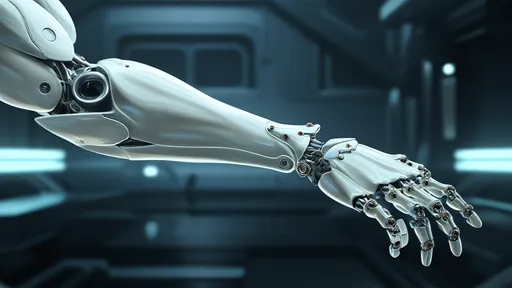
The future trajectory of embodied AI research points toward even greater integration between virtual and physical realms. Some laboratories are pioneering hybrid systems where agents trained in simulation transfer their learning to robotic bodies, closing the loop between digital and material existence. Other projects explore massively parallel virtual ecosystems containing thousands of interacting agents, creating microcosms where evolutionary dynamics unfold at accelerated timescales. These developments suggest we're witnessing just the beginning of what embodied intelligence might achieve.
What makes this approach fundamentally different from previous AI paradigms is its rejection of intelligence as pure computation. By grounding artificial minds in simulated bodily experiences and environmental constraints, researchers are rediscovering the ancient truth that wisdom emerges through doing, through struggling with and adapting to the world's resistance. As the field progresses, it may well force us to reconsider not just how we build intelligent machines, but what intelligence truly means.

By /Jul 9, 2025

By /Jul 9, 2025
By /Jul 9, 2025

By /Jul 9, 2025

By /Jul 9, 2025

By /Jul 9, 2025

By /Jul 9, 2025

By /Jul 9, 2025

By /Jul 9, 2025

By /Jul 9, 2025

By /Jul 9, 2025

By /Jul 9, 2025
By /Jul 9, 2025

By /Jul 9, 2025

By /Jul 9, 2025
By /Jul 9, 2025

By /Jul 9, 2025

By /Jul 9, 2025