In a groundbreaking shift that redefines the traditional boundaries between human intuition and machine intelligence, artificial intelligence systems are now actively guiding scientists in designing experiments. This emerging paradigm, often referred to as "machine learning feedback loops," represents a significant leap forward in how research is conducted across disciplines ranging from molecular biology to materials science. The implications are profound: AI is no longer just a tool for analyzing data but has become a collaborative partner in the creative process of scientific discovery.
The rise of AI-driven experimental design marks a departure from conventional research methodologies where human researchers would hypothesize, test, and iterate. Today, sophisticated machine learning algorithms can process vast amounts of existing research data, identify patterns invisible to human scientists, and propose novel experimental approaches that might never have occurred to even the most brilliant minds. At Stanford University, for instance, an AI system recently suggested an unconventional combination of chemical compounds that led to the discovery of a new class of catalysts, surprising the entire research team with its ingenuity.
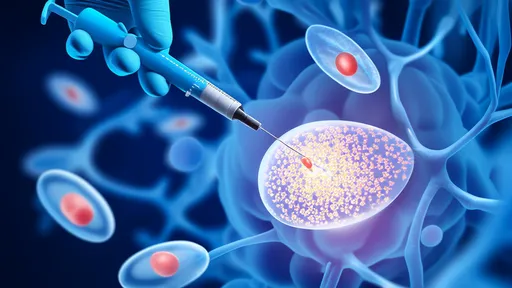
What makes this development particularly remarkable is the two-way street of knowledge transfer it establishes. While humans train AI models with existing scientific knowledge, these models can now return the favor by pointing researchers toward unexplored avenues. Pharmaceutical companies are leveraging this capability to accelerate drug discovery, with AI systems proposing molecular structures that could potentially treat diseases while minimizing side effects. In one notable case, an AI-designed compound showed 40% greater efficacy than human-designed alternatives in preliminary trials.
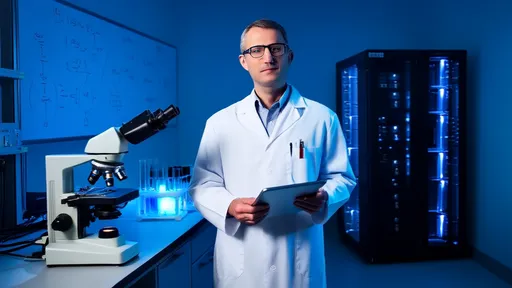
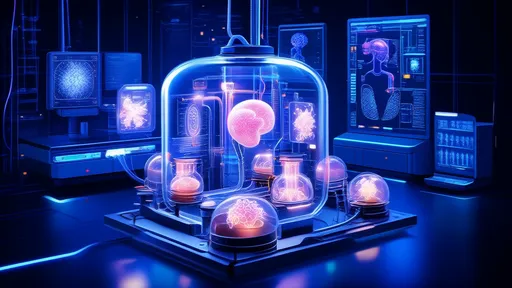
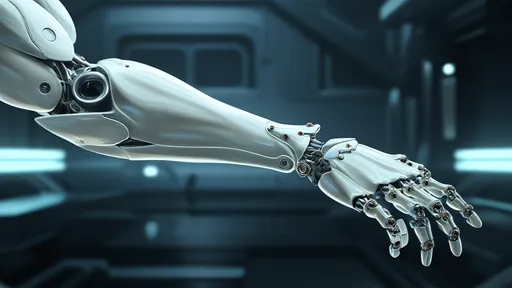
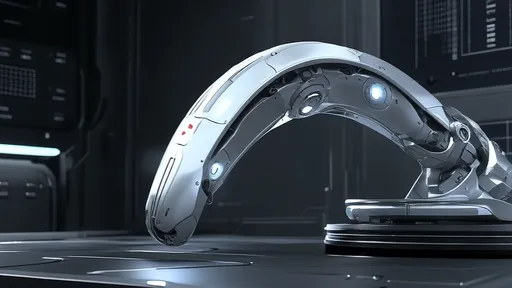
The practical implementation of AI-guided experimentation requires sophisticated infrastructure. Laboratories are increasingly incorporating automated robotic systems that can execute the precise experimental protocols suggested by AI with superhuman accuracy and consistency. This combination of machine learning for design and robotics for implementation creates a closed-loop system where each experiment's results feed back into the AI to refine future suggestions. The European Molecular Biology Laboratory has reported a threefold increase in experimental throughput since adopting such a system last year.
Critically, this approach doesn't render human scientists obsolete but rather augments their capabilities. Researchers describe working with these AI systems as having a tireless, infinitely knowledgeable collaborator that can process the entire scientific literature overnight and present actionable insights by morning. The human role evolves to focus more on interpreting results, considering ethical implications, and applying creative judgment to the AI's suggestions. As Dr. Elena Rodriguez of MIT puts it, "It's like the AI serves as a compass, pointing us in directions we might not have considered, while we remain the explorers making the final decisions about which paths to take."
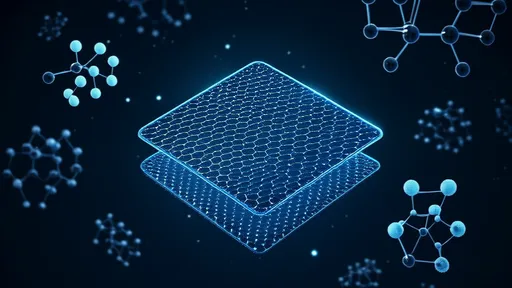
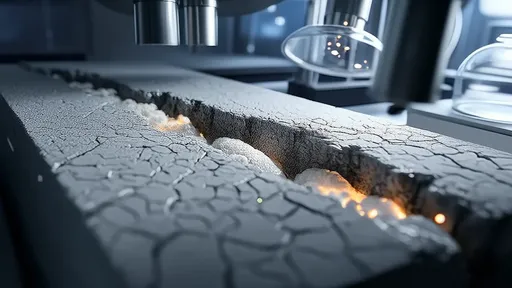
Looking ahead, the potential applications of AI-guided experimental design appear limitless. In climate science, researchers are using AI to optimize carbon capture materials by simulating millions of molecular configurations. Astronomers are employing similar techniques to design more efficient telescope observation schedules that maximize the chances of detecting exoplanets. Even in fields like psychology and economics, where experiments often involve human subjects, AI is helping design studies that yield more statistically robust results while minimizing participant burden.
As this technology matures, it raises important questions about the nature of scientific discovery itself. The traditional model of individual genius making breakthrough discoveries may give way to a more collaborative model where human creativity and machine intelligence work in concert. What remains unchanged is the ultimate goal: pushing forward the frontiers of human knowledge. The laboratories pioneering these approaches are finding that when human intuition and artificial intelligence combine forces, the whole becomes greater than the sum of its parts, opening new chapters in humanity's endless quest to understand and shape the world around us.
By /Jul 9, 2025
By /Jul 9, 2025
By /Jul 9, 2025
By /Jul 9, 2025
By /Jul 9, 2025
By /Jul 9, 2025

By /Jul 9, 2025

By /Jul 9, 2025
By /Jul 9, 2025
By /Jul 9, 2025
By /Jul 9, 2025
By /Jul 9, 2025
By /Jul 9, 2025
By /Jul 9, 2025
By /Jul 9, 2025
By /Jul 9, 2025
By /Jul 9, 2025
By /Jul 9, 2025