Self-Healing Concrete: Smart Building Materials for Crack Repair by Microorganisms

Jul 9, 2025 By

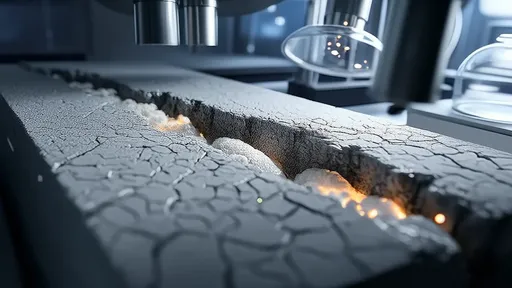
The construction industry is undergoing a quiet revolution with the emergence of self-healing concrete, a groundbreaking material that promises to extend the lifespan of infrastructure while reducing maintenance costs. At the heart of this innovation lies an unlikely hero: microorganisms capable of repairing cracks autonomously. This bio-concrete represents a paradigm shift in how we think about building materials, blending biology with engineering to create structures that can literally heal themselves.

Traditional concrete, despite its strength and durability, is prone to cracking over time due to environmental stresses, chemical attacks, and mechanical loads. These cracks, often microscopic at first, allow water and aggressive chemicals to penetrate, eventually leading to corrosion of reinforcement steel and structural deterioration. For decades, engineers have sought solutions to this fundamental weakness, but it wasn't until researchers looked to nature for inspiration that a truly transformative approach emerged.

The science behind microbial self-healing concrete is as fascinating as it is effective. Scientists embed specially selected bacteria spores and their nutrient source (often calcium lactate) into the concrete mix during production. These microorganisms remain dormant until cracks form and water infiltrates the material. When activated by moisture, the bacteria begin to metabolize their food source, producing limestone as a byproduct that gradually fills the cracks from the inside out.

What makes this process particularly remarkable is its precision and efficiency. The bacteria only activate when needed - when cracks appear and water is present - meaning they can remain viable for decades before springing into action. The healing process typically begins within days of crack formation and can completely seal fractures up to 0.8mm wide, significantly improving the concrete's durability and waterproofing capabilities.

Several bacterial strains have shown particular promise for this application. Bacillus pseudofirmus and Sporosarcina pasteurii are among the most commonly used species due to their ability to survive in concrete's highly alkaline environment and their efficient production of calcium carbonate. These extremophile bacteria naturally thrive in harsh conditions, making them perfectly suited for life within concrete structures.

The implications of this technology extend far beyond simple crack repair. By preventing water penetration, microbial concrete significantly reduces the risk of steel reinforcement corrosion - the primary cause of structural failure in concrete buildings and bridges. This could dramatically extend the service life of critical infrastructure while reducing the need for costly repairs and the associated carbon emissions from construction activities.

Field tests and early applications have demonstrated the technology's real-world potential. In the Netherlands, a municipal parking garage became the first structure to incorporate self-healing concrete on a large scale. After several years of service, microscopic analysis revealed that bacterial activity had successfully sealed developing cracks, validating the concept outside laboratory conditions. Similar pilot projects are now underway in Japan, the United Kingdom, and the United States.

Environmental benefits represent another compelling advantage of microbial concrete. The global construction industry accounts for approximately 8% of total CO2 emissions, with cement production alone responsible for a significant portion. By extending structure lifespans and reducing the need for replacement concrete, self-healing technology could make a meaningful contribution to sustainability efforts in the built environment.

Challenges remain before widespread adoption becomes feasible. Current formulations add about 10-15% to material costs, though proponents argue this premium is offset by long-term savings. Researchers are also working to optimize the concentration and distribution of bacteria within the concrete matrix while ensuring the microorganisms remain viable throughout the structure's intended lifespan, which could span centuries for some infrastructure projects.

The development of self-healing concrete illustrates how interdisciplinary collaboration can yield transformative solutions. Microbiologists, materials scientists, and civil engineers have combined their expertise to create what might be the first widely adopted "living" building material. As research progresses, future iterations may incorporate different microbial strains capable of performing additional functions, such as air purification or pollution absorption.

Looking ahead, the integration of microbial concrete with other smart material technologies could lead to even more advanced infrastructure systems. Imagine buildings that not only repair themselves but also adapt to environmental changes or generate energy through biological processes. While such visions remain in the realm of research, the successful development of self-healing concrete proves that biological solutions can work in construction environments.

As climate change increases the stresses on our infrastructure through more extreme weather patterns, the need for resilient building materials becomes ever more pressing. Microbial self-healing concrete offers a promising path forward - one where structures gain biological attributes that help them withstand the test of time. This innovation stands as a testament to human ingenuity and our growing ability to harness nature's solutions for technological advancement.

The coming decade will likely see increased commercialization of this technology as production scales up and costs decrease. Early adopters are already specifying microbial concrete for critical infrastructure elements where repair would be particularly difficult or costly, such as underground foundations, bridge decks, and offshore structures. As performance data accumulates from these real-world applications, confidence in the technology will grow, potentially making self-healing capabilities a standard feature in future concrete formulations.
Recommend Posts
Science

Wave Energy Farms: Stable Power Generation Amidst Ocean Turbulence

By /Jul 9, 2025

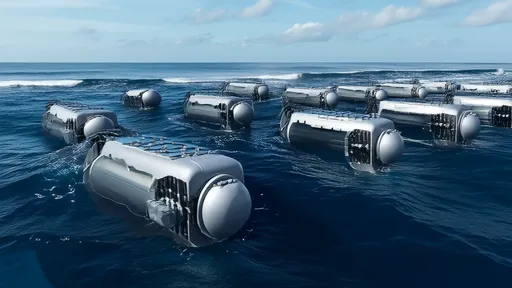
The restless ocean has always been a source of both awe and untapped potential. For centuries, humans have harnessed wind and solar energy, but the rhythmic rise and fall of waves remained an elusive power source—until now. Wave energy farms are emerging as a groundbreaking solution to extract electricity from the sea's perpetual motion, offering a stable and predictable renewable energy source amidst the growing demand for clean power.
Science

Geothermal Power 2.0: The Revolution of Supercritical CO2 Turbines

By /Jul 9, 2025

The energy sector is on the cusp of a transformative leap as geothermal power generation enters its next evolutionary phase. At the heart of this revolution lies an unexpected protagonist: supercritical carbon dioxide (sCO₂). What was once considered a problematic greenhouse gas is now emerging as the key to unlocking geothermal energy's full potential, thanks to groundbreaking advances in turbine technology.
Science

Evolution of Behavioral Patterns in Virtual World for Embodied Intelligence

By /Jul 9, 2025

The concept of embodied intelligent agents evolving behavioral patterns within virtual environments represents a fascinating frontier in artificial intelligence and computational neuroscience. Unlike traditional AI systems that operate in abstract, disembodied frameworks, these agents interact with digital worlds through simulated physical forms, allowing for more nuanced and adaptive learning processes. This paradigm shift is reshaping how researchers approach machine learning, cognitive modeling, and even our understanding of biological intelligence.
Science

Machine Learning Feedback: AI Guides Human Scientists in Designing Experiments

By /Jul 9, 2025

In a groundbreaking shift that redefines the traditional boundaries between human intuition and machine intelligence, artificial intelligence systems are now actively guiding scientists in designing experiments. This emerging paradigm, often referred to as "machine learning feedback loops," represents a significant leap forward in how research is conducted across disciplines ranging from molecular biology to materials science. The implications are profound: AI is no longer just a tool for analyzing data but has become a collaborative partner in the creative process of scientific discovery.
Science

Edge Computing Intelligence: Autonomous Ecological Monitoring Stations in the Desert

By /Jul 9, 2025

The vast and unforgiving deserts of the world have long been considered barren wastelands, but beneath their harsh exteriors lie fragile ecosystems that require careful observation. Traditional ecological monitoring methods, reliant on manual data collection and centralized processing, often fall short in these remote and extreme environments. However, a new wave of innovation is emerging—autonomous ecological monitoring stations powered by edge computing intelligence. These self-sustaining units are transforming how scientists study desert ecosystems, providing real-time insights while operating independently in some of the planet's most isolated regions.
Science

Unsupervised Learning Breakthrough: AI Discovers New Material Laws Autonomously

By /Jul 9, 2025

In a groundbreaking development that could reshape materials science, artificial intelligence has independently discovered new physical laws without human supervision. Researchers at the Massachusetts Institute of Technology (MIT) have demonstrated how machine learning algorithms can uncover fundamental relationships in material behavior that had eluded scientists for decades. This achievement marks a significant leap forward in autonomous scientific discovery and opens unprecedented possibilities for accelerating research across multiple disciplines.
Science

Physical Neural Networks: A New AI Architecture Simulating Natural Laws

By /Jul 9, 2025

In the rapidly evolving field of artificial intelligence, researchers are increasingly turning to the natural world for inspiration. The latest breakthrough comes in the form of physics-inspired neural networks, a novel architecture that seeks to emulate the fundamental laws governing our universe. This approach represents a significant departure from traditional deep learning models, offering tantalizing possibilities for solving complex real-world problems.
Science

Vagus Nerve Stimulation: Electrical Signals for Treating Chronic Inflammation

By /Jul 9, 2025

Chronic inflammation has long been a formidable adversary in modern medicine, implicated in diseases ranging from rheumatoid arthritis to cardiovascular disorders. Traditional treatments often rely on pharmaceuticals that come with a host of side effects. But what if the body’s own electrical wiring could be tapped to control inflammation? Emerging research into vagus nerve stimulation (VNS) suggests this might not only be possible but could revolutionize how we treat inflammatory conditions.
Science

Senescent Cell Clearance Agents: Cellular Therapies for Extending Healthy Lifespan

By /Jul 9, 2025

The quest for longevity has entered a fascinating new phase with the emergence of senolytic therapies—treatments designed to selectively eliminate aging cells. These "zombie cells," known scientifically as senescent cells, accumulate in tissues as we age, secreting harmful inflammatory factors that contribute to age-related diseases. Researchers now believe that targeting these cells could not only extend lifespan but, more importantly, dramatically improve healthspan—the period of life free from chronic illness and disability.
Science

Nucleic Acid Nanorobots: Precise Drug Delivery's Molecular Transport Team

By /Jul 9, 2025

The realm of medical science is witnessing a groundbreaking revolution with the advent of nucleic acid nanorobots—a fleet of molecular transporters designed to deliver drugs with unprecedented precision. These tiny yet sophisticated machines, constructed from the very building blocks of life, are poised to redefine targeted therapy, offering hope for treating diseases at their root with minimal side effects.
Science

Organ-on-a-Chip Consortium: Miniature Laboratories of Human Systems

By /Jul 9, 2025

The Organ-on-a-Chip (OoC) Consortium represents a groundbreaking frontier in biomedical research, where miniature models of human organs are engineered to replicate the complexities of living systems. These microphysiological platforms are transforming how scientists study disease mechanisms, test drug efficacy, and evaluate toxicity—all while reducing reliance on animal testing. By mimicking the structural and functional nuances of human tissues, these chips offer an unprecedented window into human biology at a fraction of the scale.
Science

Mitochondrial Transplantation: A New Hope for Treating Neurodegenerative Diseases

By /Jul 9, 2025

In the relentless pursuit of effective treatments for neurodegenerative diseases, scientists have turned their attention to an innovative approach that targets the very powerhouses of our cells - the mitochondria. Mitochondrial transplantation, a groundbreaking therapeutic strategy, is emerging as a beacon of hope for conditions like Alzheimer's, Parkinson's, and ALS that have long eluded definitive cures.
Science

Bionic Nacre: 3D-Printed Fracture Repair Armor

By /Jul 9, 2025

In a groundbreaking fusion of biology and engineering, researchers have developed 3D-printed fracture repair armor inspired by the remarkable structure of nacre, or mother-of-pearl. This innovative approach promises to revolutionize orthopedic medicine by offering stronger, more flexible, and biocompatible solutions for bone fractures. The natural world has once again provided a blueprint for human innovation, with the layered, brick-and-mortar architecture of seashells guiding the design of next-generation medical implants.
Science

Boronene Breakthrough: A Stronger 2D Conductor Than Graphene

By /Jul 9, 2025

The world of two-dimensional materials has witnessed a groundbreaking development with the recent advancements in borophene applications. Dubbed as the "stronger cousin of graphene," this atomically thin material is demonstrating exceptional electrical conductivity and mechanical properties that could redefine multiple industries. Researchers now believe borophene may overcome several limitations that have hindered graphene's widespread commercial adoption.
Science

Liquid Metal Robot: Reconfigurable Soft Actuator

By /Jul 9, 2025

In a groundbreaking leap for robotics, researchers have unveiled a new class of actuators powered by liquid metal alloys—materials that blur the line between solid and fluid. These reconfigurable soft actuators promise to revolutionize everything from medical devices to search-and-rescue robots, offering unprecedented flexibility and adaptability. Unlike traditional rigid components, these systems can morph their shape dynamically, enabling movements that were once the exclusive domain of science fiction.
Science

Aerogel Metamaterials: Insulation Guardians from -100°C to 3000°C

By /Jul 9, 2025

In the realm of advanced materials science, aerogel metamaterials have emerged as a revolutionary solution for extreme thermal insulation. These nanostructured wonders defy conventional limitations, creating an invisible shield against temperatures ranging from cryogenic -100°C to blistering 3000°C. Unlike traditional insulation materials that rely on bulk or density, aerogels achieve their remarkable properties through carefully engineered nanoscale architectures.
Science

Self-Healing Concrete: Smart Building Materials for Crack Repair by Microorganisms

By /Jul 9, 2025

The construction industry is undergoing a quiet revolution with the emergence of self-healing concrete, a groundbreaking material that promises to extend the lifespan of infrastructure while reducing maintenance costs. At the heart of this innovation lies an unlikely hero: microorganisms capable of repairing cracks autonomously. This bio-concrete represents a paradigm shift in how we think about building materials, blending biology with engineering to create structures that can literally heal themselves.
Science

Urban Ecological Corridors: Sky Green Bridges for Wildlife

By /Jul 9, 2025

In the heart of our bustling cities, a quiet revolution is taking place—one that bridges the gap between urban development and wildlife conservation. Cities around the world are increasingly adopting an innovative solution to habitat fragmentation: ecological corridors, often referred to as "green bridges" or "wildlife overpasses." These structures, draped in lush vegetation, stretch across highways and urban sprawls, offering safe passage to animals and reconnecting fragmented ecosystems. It’s a testament to humanity’s growing awareness of its shared space with nature.