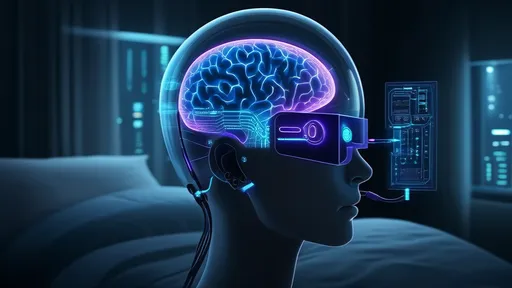
For decades, neurons have been the undisputed stars of neuroscience research, celebrated for their electrical signaling and central role in cognition. Yet a quiet revolution is unfolding in labs worldwide as scientists uncover the astonishing capabilities of their cellular support crew – glial cells. Once dismissed as mere "brain glue," these enigmatic cells are now revealing themselves as master regulators of neurogenesis, synaptic plasticity, and neural repair.
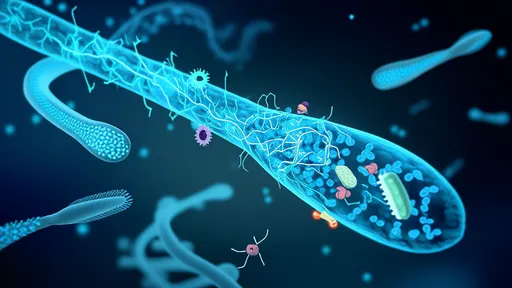
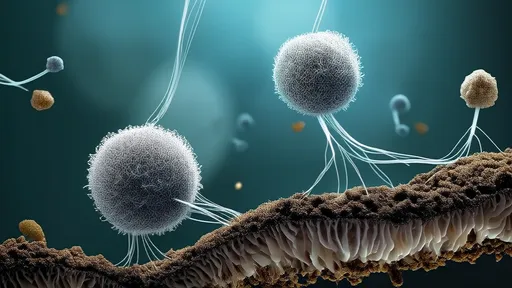
The shift began with the discovery that glial cells outnumber neurons in the human brain by nearly ten to one. This numerical superiority hinted at deeper biological significance. Astrocytes, the most abundant glial subtype, have since been shown to form intricate networks that modulate neuronal activity through calcium signaling. Their star-shaped processes envelop synapses in what scientists now recognize as the "tripartite synapse" – a dynamic partnership where astrocytes actively participate in information processing.
Oligodendrocytes, another glial variety, demonstrate equally transformative potential. Beyond their known role in myelination, these cells secrete growth factors that determine whether damaged neurons regenerate or degenerate. Recent studies reveal they maintain molecular "memory" of past injuries, priming the nervous system for faster recovery upon subsequent damage. This finding overturns the long-held dogma that CNS neurons lack regenerative capacity – the limitation appears to lie not with neurons themselves, but with the regulatory signals from their glial neighbors.
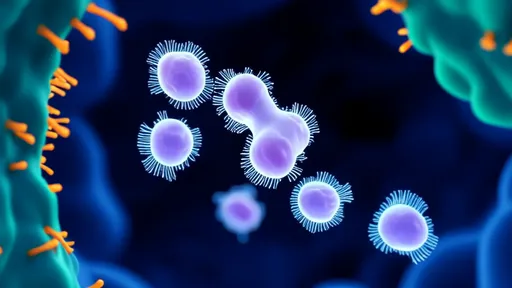
The real game-changer emerged when researchers manipulated microglia, the brain's resident immune cells. By reprogramming these cellular janitors into a pro-regenerative state, scientists achieved unprecedented axon regrowth in spinal cord injury models. Even more remarkably, activated microglia appear to guide newborn neurons to precise locations, challenging the belief that neurogenesis inevitably creates chaotic, nonfunctional connections.
What makes glia particularly compelling therapeutic targets is their plasticity. Unlike hardwired neuronal circuits, glial networks remain malleable throughout adulthood. Experimental drugs that modulate astrocyte metabolism or shift microglial polarization states show promise in conditions ranging from Alzheimer's to traumatic brain injury. Early clinical trials report cognitive improvements when glial activity is fine-tuned, without directly interfering with neuronal firing patterns.
The implications extend beyond repair. Radial glia, once thought to disappear after development, persist in discrete brain regions as neural stem cells. These reservoirs of neurogenic potential suggest adult brains may harbor untapped capacities for self-renewal. Researchers are developing techniques to awaken this dormant potential by manipulating the same signaling pathways that glia use during embryonic development.
Critically, glia don't operate in isolation. Their true power lies in coordinated cross-talk. Astrocytes release signals that shape microglial behavior, while oligodendrocytes respond to neuronal activity by adjusting myelination patterns. This integrated system creates a responsive biological framework where structural support, immune defense, and metabolic regulation converge to optimize neural function.
As tools for single-cell analysis improve, scientists are discovering glial diversity rivaling that of neurons. Distinct astrocyte subtypes populate different brain regions, each with specialized gene expression profiles. This cellular mosaicism suggests glia may encode regional information – potentially explaining why certain brain areas show greater regenerative capacity than others.
The therapeutic horizon glows with possibility. Biotech startups are developing glial-targeted vectors for gene therapy, while pharmaceutical companies screen compounds that enhance glial neuroprotective functions. Perhaps most revolutionary is the emerging concept of "glial engineering" – deliberately reshaping these cells to create favorable microenvironments for neural regeneration.
This paradigm shift carries philosophical weight. By elevating glia from supporting actors to directors of neural plasticity, we're rewriting fundamental concepts of brain function. The next decade promises not just new treatments, but a transformed understanding of what makes biological intelligence possible. As one researcher quipped, "We spent centuries studying the brain's wires while ignoring the electricians." The age of glia has arrived.

By /Jul 3, 2025
By /Jul 3, 2025
By /Jul 3, 2025
By /Jul 3, 2025

By /Jul 3, 2025
By /Jul 3, 2025
By /Jul 3, 2025
By /Jul 3, 2025
By /Jul 3, 2025

By /Jul 3, 2025

By /Jul 3, 2025

By /Jul 3, 2025

By /Jul 3, 2025
By /Jul 3, 2025

By /Jul 3, 2025
By /Jul 3, 2025
By /Jul 3, 2025

By /Jul 3, 2025